

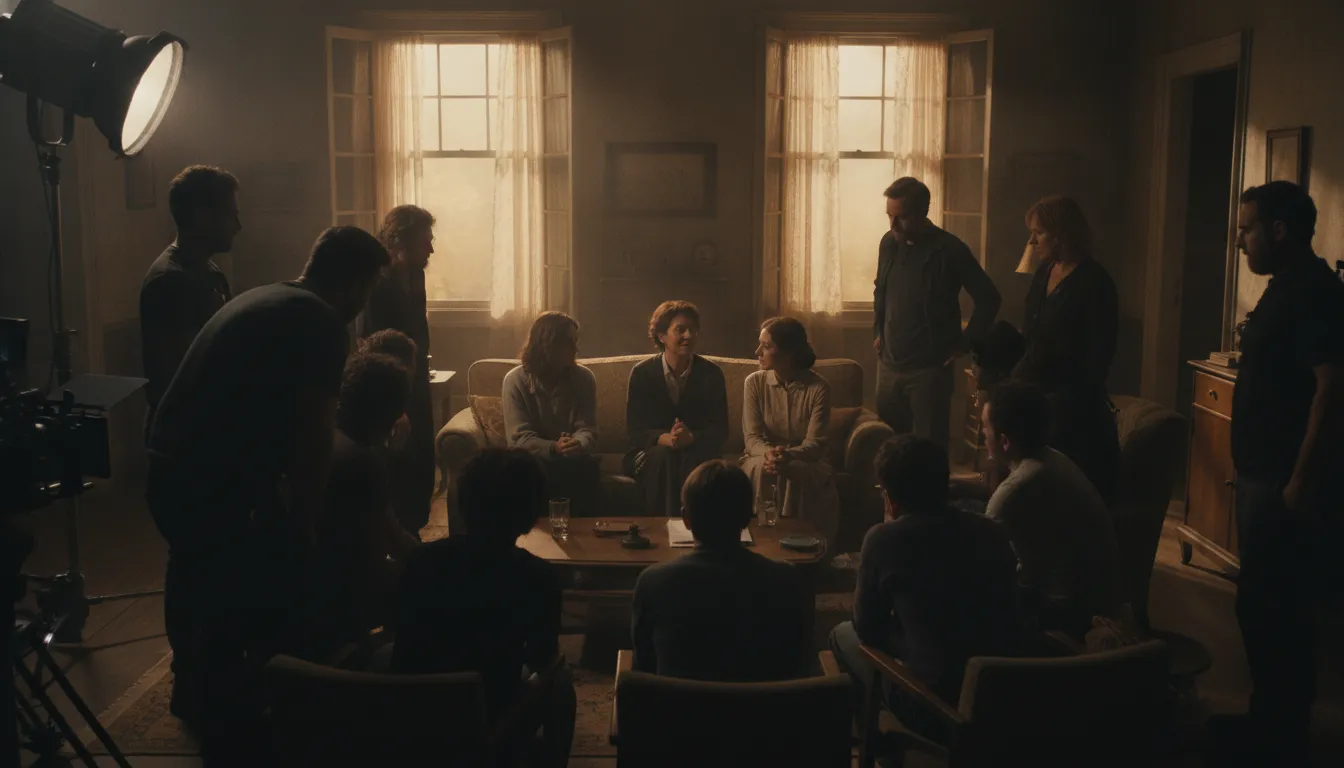
A mental health consultant for TV and film helps creative teams build psychologically believable characters, dialogue, relationships, and clinical scenes. Producers, directors, and writers can involve a consultant from early development through post-production. The goal is not to flatten a story into a lesson or remove dramatic tension. It is to help the production make informed creative choices, avoid distracting inaccuracies, and portray complex human experiences with greater care.
Book a complimentary 20-minute consultation to discuss the psychological questions shaping your production.
For producers, the most useful question is rarely whether a project is "about mental health." Any story involving grief, trauma, family conflict, addiction, therapy, crisis, or major behavioral change may benefit from psychological expertise. Early consultation can clarify the character logic beneath a scene before costly creative decisions become difficult to change.
What does a mental health consultant for TV and film do?
A consultant translates clinical knowledge into practical guidance for storytellers. That may mean reviewing a premise, mapping a character's emotional development, checking a therapy scene, or helping an actor and director understand what a person might experience in a specific moment. The consultant advises; the creative team retains ownership of the story.
Creative consultation is not clinical treatment
Consultation supports the project and its storytelling choices. It is distinct from therapy, diagnosis, or treatment for cast and crew. Keeping that boundary clear allows everyone to understand the purpose of the engagement, the limits of the consultant's role, and the appropriate path if someone needs personal mental health support.
Typical consultation deliverables
Depending on the production, deliverables can include annotated script notes, a written character formulation, verbal feedback in a writers' room, scene-specific guidance, research briefings, or scheduled checkpoints through production. A consultant may identify several plausible options rather than prescribe one "correct" version. That flexibility helps writers protect tone, genre, pacing, and character voice.
Questions a consultant can help answer
- Does the character's behavior feel consistent with their history and current circumstances?
- Would this clinician, family member, or partner plausibly respond this way?
- What details could make a therapy, crisis, or recovery scene feel more authentic?
- Does the story unintentionally reinforce a harmful stereotype?
- Can the same dramatic purpose be achieved with a more nuanced choice?
When should a production bring in a consultant?
The earlier a consultant joins, the more options the creative team has. A single script review near picture lock can still catch language or continuity issues. However, consultation during development can shape a character arc before it becomes embedded across episodes, locations, casting choices, and performances.
- Premise and development: Pressure-test the central concept, character motivations, and psychological stakes.
- Outline and writers' room: Map emotional continuity, identify sensitive turns, and explore plausible responses.
- Script review: Check dialogue, clinical scenes, symptoms, relationship dynamics, and cause-and-effect logic.
- Pre-production and rehearsal: Support directors and performers with context for key scenes while preserving creative interpretation.
- Production and post: Answer focused questions, review meaningful changes, and assess whether an edit alters the intended portrayal.
- Publicity planning: Help the team describe the portrayal thoughtfully without making unsupported clinical claims.

Signals that early input will be valuable
Consider early consultation when a character's condition drives the plot, when treatment or hospitalization appears on screen, or when the story hinges on a major behavioral shift. Early input is also useful when the team is deciding how much to name explicitly. A character can be psychologically coherent without becoming a diagnostic checklist.
When a focused review may be enough
A limited review may suit a project with one therapy scene, a short mental health reference, or a narrow continuity question. Define the question and provide enough surrounding material to evaluate it. Even a focused scene can read differently when separated from the character's broader arc.
What can psychological consultation cover?
Consultation can address any part of a story shaped by human behavior and relationships. The work is not limited to named diagnoses. The Relationship Clinic's entertainment industry consultation can help writers and producers develop characters, refine plotlines, and guide depictions of therapy and diagnosis. In many projects, the most valuable insight concerns how people protect themselves, communicate under pressure, repeat patterns, or respond to loss and uncertainty.
Character psychology and emotional continuity
A consultant can help clarify what a character wants, fears, avoids, and believes about other people. Those elements create an internal logic that supports surprising choices without making them feel arbitrary. For episodic work, consultation can also track how earlier events might influence later behavior without forcing every response into a simple progression.
Therapy and clinical settings
Clinical scenes involve more than accurate terminology. The consultant can review the therapist's boundaries, the rhythm of a session, the physical environment, confidentiality questions, and the difference between therapeutic approaches. The practice's work in individual therapy provides grounded context for how a therapeutic exchange may unfold. A believable scene can still be brief, funny, tense, or visually inventive.
Trauma, crisis, and recovery
Stories involving trauma or crisis benefit from attention to variability. People do not all respond in the same way, on the same timeline, or with the same outward signs. Consultation helps the production avoid treating one response as universal. It can also support a recovery arc that allows for progress, setbacks, ambivalence, and relationships.
Couples, families, and group dynamics
Relationship expertise can illuminate conflict beneath the spoken argument. The practice's couples therapy expertise can inform the patterns behind a scene without turning it into a clinical lesson. A scene may be about money on the surface while the emotional stakes involve trust, recognition, control, or fear of abandonment. Understanding that deeper pattern gives actors and directors more playable material.
How expert input strengthens storytelling
Psychological accuracy is not only an ethical concern. It is a creative tool. When behavior has a coherent emotional foundation, a performance can become more specific, conflict can feel more earned, and an audience can stay inside the story rather than being pulled out by a familiar stereotype or implausible clinical moment.
Explore consultation for your production and identify the stage where expert input can have the greatest creative impact.
More dimensional characters
A consultant can help replace a broad label with observable, character-specific choices. Instead of treating a diagnosis as a personality, the team can consider the person's relationships, coping strategies, strengths, contradictions, and context. This produces a character rather than a case study.
Stronger dramatic choices
Accuracy does not require the least dramatic option. Often, expert input reveals more interesting possibilities. A person may conceal distress, respond with humor, become unusually controlled, or direct fear toward an apparently unrelated conflict. These choices can deepen suspense while remaining psychologically grounded.
Fewer avoidable revisions
Early review can surface a structural issue before it spreads through multiple drafts. During production, a clearly scoped consultant can answer priority questions quickly and explain which details materially affect credibility. The producer can then allocate attention where it matters most.
Greater audience trust
Viewers bring lived experience to stories. No portrayal can represent everyone, but a nuanced portrayal signals that the production took its subject seriously. That care can support conversation while reducing the risk that a character is defined only by symptoms, danger, or tragedy.
How to choose the right mental health consultant
The right consultant combines relevant clinical depth with an ability to collaborate inside a creative process. Credentials matter, but so do communication, responsiveness, comfort with ambiguity, and respect for the production's goals. A helpful consultant explains the reasoning behind notes and offers alternatives that remain usable on the page or set.
| What to evaluate | What strong fit looks like | Question to ask |
|---|---|---|
| Clinical depth | Relevant experience and careful limits on claims | What experience informs your guidance on this topic? |
| Creative fluency | Understands story, genre, character, and production constraints | How do you balance accuracy with dramatic needs? |
| Collaboration | Explains notes clearly and offers more than one workable path | How do you handle creative disagreement? |
| Scope and process | Defines deliverables, timing, revision rounds, and contacts | What materials and lead time do you need? |
| Privacy and boundaries | Distinguishes consultation from treatment and handles material discreetly | How do you approach confidentiality and role boundaries? |
Look for both expertise and translation skill
A consultant may possess deep knowledge yet struggle to turn it into a useful note. Ask how they would communicate uncertainty, handle multiple plausible interpretations, and adapt guidance for a writer, director, performer, or producer. The best relationship feels collaborative rather than corrective.
Agree on scope before work begins
Specify what the consultant will review, who will consolidate production questions, how feedback will be delivered, and how quickly urgent questions need a response. If the project may request rehearsal or on-set support, discuss that possibility early. Clear scope protects the production and the consultant from avoidable confusion.
A practical consultation workflow for productions
A simple workflow makes consultation more efficient and keeps creative authority in the right hands. Begin with a short briefing that explains genre, audience, tone, production stage, and the questions that matter most. Share enough material for context, then identify the person authorized to gather and prioritize feedback.
Start with the creative intention
Tell the consultant what the scene or arc must accomplish. A note becomes more useful when the consultant understands that a moment needs to reveal mistrust, accelerate a breakup, misdirect the audience, or prepare a later choice. The goal is to support the intention, not merely identify what is unrealistic.
Consolidate questions and decisions
Designate a lead contact to prevent duplicated or conflicting requests. That person can gather questions from departments, provide the relevant pages, and record decisions. For an episodic project, a short continuity document can capture the psychological assumptions the room has chosen to follow.
Schedule checkpoints around meaningful changes
Consultation does not need to become an endless review cycle. Choose checkpoints where feedback has leverage, such as the outline, first full draft, final shooting draft, and a significant rewrite. Ask for a focused follow-up when performance, location, or edit choices materially change the portrayal.
Keep notes actionable
Useful notes identify the issue, explain why it matters, and offer one or more alternatives. The production can then weigh psychological credibility alongside budget, schedule, tone, and story. Not every note must be adopted. Documenting the reasoning helps the team make deliberate choices.
Accuracy, ethics, and care on the page and screen
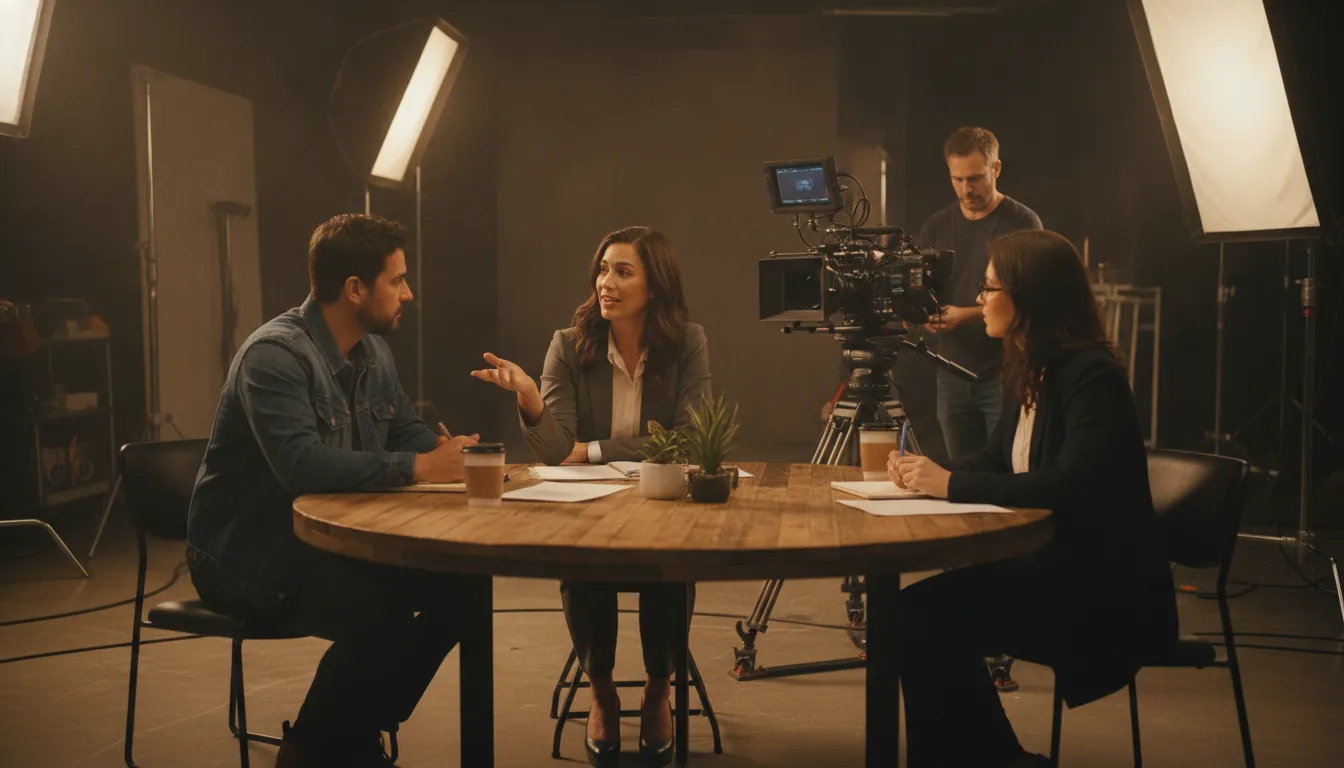
Responsible storytelling begins with recognizing that mental health experiences are varied and shaped by culture, relationships, resources, and context. A consultant can identify patterns that deserve another look, but no single professional speaks for every person with a particular experience. The creative team should remain open to complexity.
Avoid making a condition the whole character
Give characters interests, competencies, relationships, humor, and agency beyond a diagnosis or crisis. Consider who they are when symptoms are not driving the scene. This protects against one-note portrayals and creates more material for the story.
Separate danger from diagnosis
When a story connects mental illness and violence, scrutinize the narrative logic. Ask whether the condition is being used as shorthand for threat or unpredictability. If the connection is essential to the premise, consultation can help add context and avoid presenting a simplistic causal claim.
Respect role boundaries
A creative consultant is not automatically an on-set therapist, wellness coordinator, or emergency resource. If a production needs support for cast and crew, it should establish an appropriate service with clearly defined responsibilities. Maintaining this distinction supports privacy and makes expectations clear.
The Relationship Clinic brings more than 35 years of clinical experience and relationship expertise to thoughtful creative collaboration. Learn more about the practice, which supports productions seeking psychologically grounded storytelling while respecting the needs of the story.
Frequently asked questions
Does every production involving mental health need a consultant?
No. The need depends on the prominence, complexity, and sensitivity of the material. Consultation is especially valuable when mental health drives a central character arc, when clinical treatment appears on screen, or when the team wants to test whether a portrayal unintentionally relies on stereotypes.
Can a consultant help without changing the story's premise?
Yes. A consultant can work within the premise and identify details that improve coherence, dialogue, or characterization. They may offer several options that preserve the intended tone and plot. The production decides which guidance to use.
Is a mental health consultant the same as an on-set therapist?
No. A mental health consultant advises the creative project. An on-set therapist or other wellness professional supports people working on the production under a separate scope. One professional may be qualified for both roles, but the responsibilities and boundaries should be defined independently.
What materials should producers share first?
Start with a logline or synopsis, relevant character descriptions, the pages or outline under review, and a list of priority questions. Explain the genre, audience, production stage, desired deliverable, and deadline. Additional context can be shared if it is needed for accurate guidance.
How early should a consultant join a TV or film project?
Early development offers the greatest creative flexibility, especially for a central character arc. A consultant can also add value during script review, rehearsal, production, or post. The right timing depends on the decisions the team is still able and willing to change.
Bring psychological depth to your production
Thoughtful consultation can help your team create characters and relationships that feel specific, human, and dramatically compelling. If you are developing a project involving complex behavior, therapy, trauma, crisis, or relationship dynamics, The Relationship Clinic can help you identify the most useful next step.
Book Your Session and begin with a complimentary 20-minute consultation to discuss your production's needs.





