

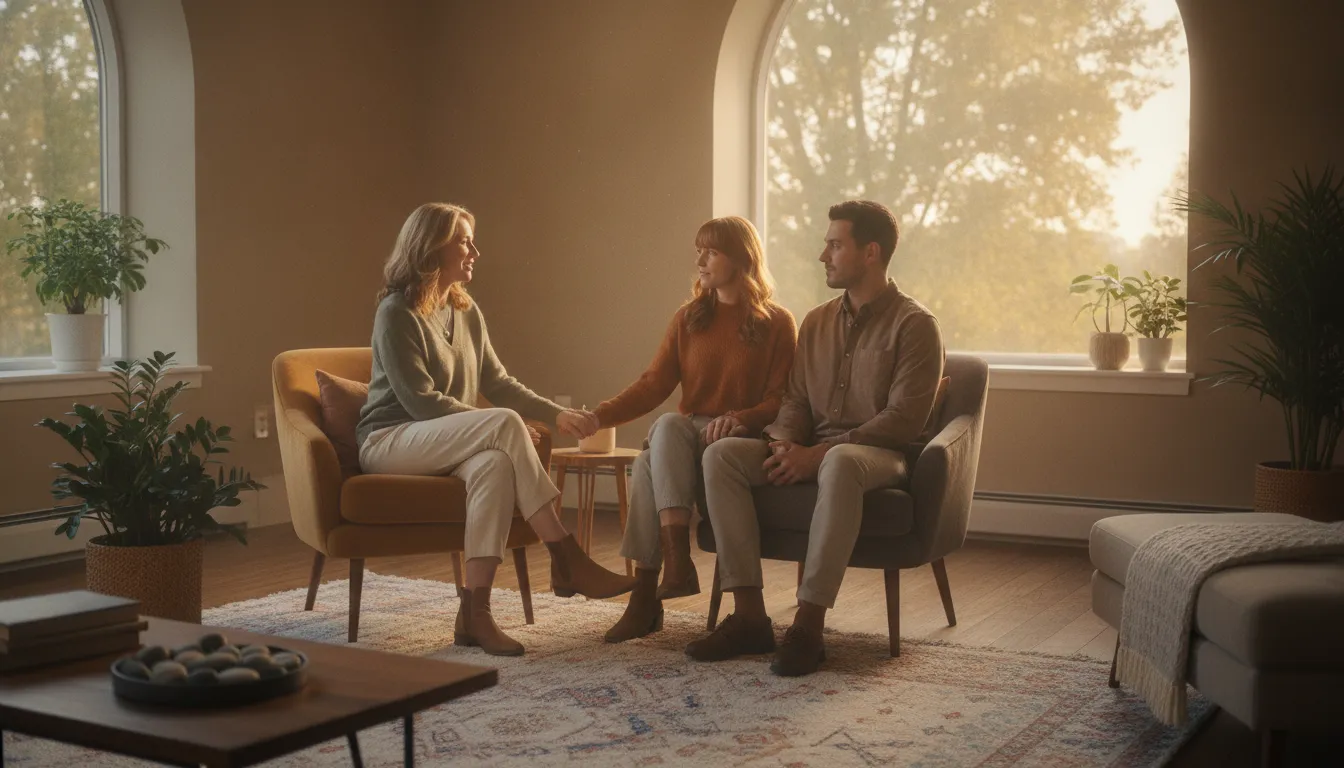
Do you keep finding yourself in the same relationship conflicts no matter how hard you try to change? Many couples discover that surface-level communication fixes only go so far. The real patterns run deeper. Modern psychodynamic therapy for relationships offers a powerful way to understand how your past shapes your present connection. It helps you break cycles that have been repeating for years.
Modern psychodynamic therapy for relationships is an evidence-based approach. It helps couples and individuals uncover how unconscious patterns, early life experiences, and deep emotions shape their current relationship dynamics. Unlike older methods that took years, this modern approach is often time-limited and goal-oriented. It blends techniques from other therapy models to support growth and lasting connection. By exploring past relationship templates and emotional triggers, clients gain insight into why they react the way they do. They learn how to build healthier patterns going forward.
Here is how modern psychodynamic therapy works, what techniques your therapist will use. And what you can expect from sessions at a practice that pairs this approach with other proven methods.
What Is Modern Psychodynamic Therapy for Relationships?
Modern psychodynamic therapy for relationships is a form of talk therapy. It focuses on exploring the full range of your emotions and the complexity of your life experiences. Unlike traditional psychoanalysis, which once required years of intensive sessions, the modern approach is often time-limited. It centers on your current relationship struggles.
At its core, this therapy works from a simple idea. Many of the patterns you repeat in close relationships have roots in earlier experiences, sometimes from childhood. Early attachment styles, family dynamics, and past relationships create templates that your mind carries forward. These templates shape how you read your partner's actions and how you respond under stress.
For couples, this approach helps both partners see their own patterns and how those patterns interact. A partner who learned that vulnerability led to disappointment may withdraw during conflict. A partner who learned that intensity equals love may push harder. Neither pattern is wrong. But without awareness, these dynamics play on repeat.
This approach works alongside the Gottman Method, Cognitive Behavioral Therapy, and other proven models. By understanding the deeper roots of your patterns, you can make changes that last.
Modern psychodynamic therapy for relationships can help you and your partner move past surface-level fixes. It addresses the deeper dynamics that keep you stuck.
How Psychodynamic Therapy Uncovers Deep Relationship Patterns
The key idea that sets this therapy apart is simple. Your current relationships are shaped by templates from your earliest bonds. These templates work below your awareness. They affect who you choose as a partner, how you handle conflict, and what triggers feelings of fear or rejection.
In the 1980s, a major shift changed psychoanalytic thinking. The field moved from a one-person drive model to a two-person psychology. This new view focused on the space between therapist and client, and between partners. It recognized that healing happens within relationships, not alone.
At The Relationship Clinic, therapists trained in modern psychodynamic theories use this understanding to help you see your patterns clearly. When a couple sits together in session, the therapist watches how they interact. The small bids for connection. The quick defensiveness. The ways each person shows hurt or hope. These live moments reveal the same patterns that play out at home.
The goal is not to blame your past. It is to see how the past shows up in your present. Once you spot a pattern in real time, you can choose a new response. Over time, this becomes automatic. Old patterns lose their hold.
This psychodynamic approach to relationship counseling is paired with other evidence-based methods, giving you a full path to change.
Key Techniques in Modern Psychodynamic Couples Therapy
Modern psychodynamic therapy uses several core techniques. Each one helps couples see and shift their patterns. These are practical tools your therapist uses in every session.
The Therapeutic Alliance
The bond between you and your therapist is itself a tool. In a safe space, you can explore hard emotions you might normally bury. Your therapist watches what you say and what you avoid saying. How you relate to them often mirrors how you relate to other key people in your life.
Exploring Past Relationship Templates
This technique traces current reactions back to their roots. When a conflict sparks a strong emotional response. The therapist helps you ask a key question. "When have I felt this way before?" The answer often shows an early template. A parent who was not available. A former partner who was harsh. A childhood moment of feeling dismissed. Naming the template lets you separate past from present. You can then respond to your real partner instead of a memory.
Understanding Emotional Reactions
Instead of stopping hard emotions, this therapy helps you understand them. Anger may guard hurt. Withdrawal may guard a fear of rejection. Anxiety may signal a need for safety. When both partners learn to read their feelings this way, conflict becomes useful information instead of a battle.
Free Association for Couples
In individual work, free association means saying whatever comes to mind. For couples, this means creating space for each partner to talk openly without editing or defending. The therapist guides the process so that both feel heard. The hidden dynamics come into view. These methods, built on decades of clinical practice and a 2017 study of seven core disciplines in relationally focused therapy, give couples a structured path to change.
Read more about deepening connection through psychodynamic therapy and how these techniques apply to you.
Psychodynamic Therapy vs. Other Approaches: A Quick Comparison
ApproachFocusTime FrameBest ForModern Psychodynamic TherapyUnconscious patterns, past templates, emotional insightTime-limited or open-endedDeep patterns, recurring conflicts, attachment issuesGottman MethodCommunication, conflict resolution, friendship buildingStructured, typically 12-20 sessionsCommunication breakdown, conflict de-escalationCognitive Behavioral TherapyThought patterns, behavior change, coping skillsShort-term, 8-20 sessionsAnxiety, depression, specific behavior changeInternal Family SystemsInner parts, self-leadership, healing wounded partsMedium to long-termTrauma, inner conflict, self-understanding
At The Relationship Clinic, your therapist draws from all of these methods. This means your sessions are not limited to one model. If a Gottman exercise helps one session, your therapist uses it. If an IFS visualization helps you access a part of yourself, that is available too. Modern psychodynamic therapy for relationships gives you the depth work. Other methods give you practical tools. Together, they offer a complete path forward.
Who Can Benefit From Modern Psychodynamic Therapy?
Modern psychodynamic therapy works well for many types of relationship challenges. You may benefit if you find yourself repeating the same arguments with your partner without real resolution. You may benefit if you sense that your reactions in the relationship are bigger than the moment calls for. You may benefit if you want to understand yourself on a deeper level while also improving your connection.
This therapy is especially useful for couples who have tried other approaches without lasting change. Communication skills are valuable, but sometimes the real obstacle is below the surface. When a couple learns to see the hidden patterns driving their conflict, the skills they already have start to work much better.
Individuals also benefit from this approach. Working one-on-one with a psychodynamic therapist helps you understand your own relationship history and how it shapes your choices. Many clients find that as they do this individual work, their relationships improve naturally. They stop choosing partners who recreate old wounds. They start communicating from a place of awareness rather than reaction.
The approach also helps with specific relationship issues. Couples dealing with trust issues after infidelity may find that psychodynamic work helps them understand what led to the breach. Partners who feel distant or disconnected can explore the emotional patterns that create that distance. Those preparing for marriage can use this therapy to uncover potential areas of hidden conflict before they become real problems. And for couples who feel they have grown apart over the years. This approach offers a path back toward each other by addressing the underlying emotional shifts that created the gap.
Regardless of where you start, the core promise of this work is the same. You gain a clearer understanding of yourself and your partner. You learn why certain triggers set off strong reactions. You develop the ability to pause, reflect, and choose a response that serves your relationship rather than one that repeats old wounds.
What to Expect From Psychodynamic Therapy at The Relationship Clinic
Your journey starts with a no-cost 20-minute phone consult. This call is a chance to share what brings you in, ask questions, and see if the fit feels right. There is no pressure to commit.
Session Structure
Regular sessions run 50 to 60 minutes. Most clients meet weekly or every two weeks. Some like weekly visits for momentum. Others prefer bi-weekly visits as they blend insights between appointments. There is no fixed end date. Your goals guide how long you stay in therapy.
Pricing and Insurance
Couples therapy costs $250 per session and does not use insurance. Individual therapy is also $250 per session. For individual work, insurance is accepted except for Kaiser Permanente. Your therapist can provide out-of-network documents if your plan covers that benefit.
Location and Access
In-person sessions take place in Palo Alto. For clients elsewhere in California, telehealth offers the same depth of work from home. Video sessions work well because the focus stays on your patterns, your feelings, and your relationship.
An Integrated Approach
At The Relationship Clinic, modern psychodynamic therapy is part of a bigger picture. Your therapist uses the Gottman Method, CBT, Internal Family Systems, and other models to fit your needs. No single method limits your work. You get depth from psychodynamic therapy and practical skills from other approaches.
Learn how psychodynamic therapy for individuals in relationships can support your growth and help you build stronger bonds.
Frequently Asked Questions About Psychodynamic Therapy for Relationships
What is psychodynamic therapy for relationships?
Psychodynamic therapy for relationships is a form of talk therapy. It explores how unconscious patterns, early experiences, and deep emotions shape how you connect with your partner. It helps you understand why you react the way you do in conflict and closeness.
How does psychodynamic therapy affect relationship patterns?
This therapy helps you see the templates formed in childhood and past bonds that replay in your current relationship. Once you see these patterns, you can choose new responses. Over time, this awareness changes how you and your partner relate to each other.
How is modern psychodynamic therapy different from traditional psychoanalysis?
Traditional psychoanalysis often meant multiple sessions each week over many years. Modern psychodynamic therapy is more flexible and collaborative. It stays deep but also uses tools from other proven methods. Your current relationship goals stay at the center.
Can psychodynamic therapy improve intimacy in relationships?
Yes. By uncovering the emotional patterns that block connection, this therapy helps couples build the conditions for deeper intimacy. Many couples find that as they understand their own patterns, they feel safer being open with each other.
Is psychodynamic therapy effective for couples?
Yes. It works well for couples who have tried tools without lasting change, because it addresses the deeper roots of behavior. At The Relationship Clinic, it is used together with the Gottman Method, CBT, and IFS for full support.
If you are ready to understand your relationship patterns and build a deeper bond, The Relationship Clinic can help. Our therapists bring over 35 years of Bay Area expertise and training in modern psychodynamic therapy, the Gottman Method, and other proven approaches.
Book Your Session today and start with a free 20-minute phone consult. This no-obligation call is your chance to ask questions and see if our approach fits your needs.
Relationships don't just happen. They are built. Let us help you build yours.





