

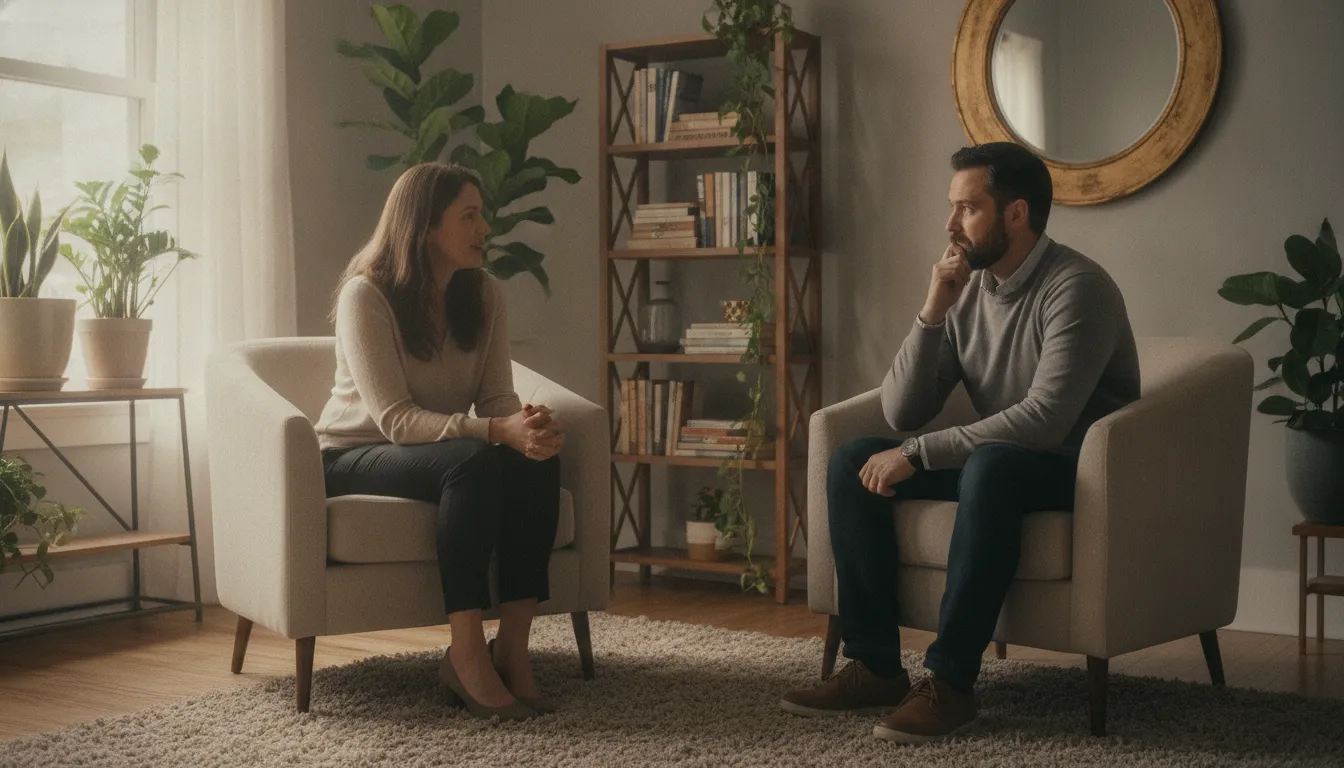
Book Your Session today to start building secure connection with a therapist for avoidant attachment.
A therapist for avoidant attachment helps adults break the painful cycle of emotional distance, guiding them toward strong, lasting, and secure connections. By providing a safe, secure space, these experts help you find and address the early life patterns that make you retreat from vulnerability. Through proven methods like Schema Therapy and the Gottman Method, individual therapy helps you face relational fears and learn new ways of connecting with others. Over time, you can replace automatic distancing habits with clear communication, allowing you to enjoy deep closeness while still keeping your personal independence. This specialized, boutique treatment is available through weekly in-person sessions in Palo Alto or secure Zoom telehealth sessions for clients anywhere across California.
What Is Avoidant Attachment and How Does It Show Up in Relationships?
Avoidant attachment is a common relationship pattern that affects how we connect with others. People with this style often want close relationships, but they feel strong fear when intimacy grows too deep. This tension can lead to stress and distance between partners. Understanding how these patterns form can help couples build stronger bonds over time. Relationships don't just happen. They are built.
The roots of avoidant patterns
These behaviors often start during childhood. When a child's early emotional needs are not consistently met, they learn to adapt. They might feel that showing their distress will only lead to rejection. To cope, they turn inward and rely only on themselves for comfort. This self-reliance helps them survive when they are young, but it makes adult closeness feel like a threat.
Signs in adult relationships
How does this look in daily life? For many, avoidant attachment is a pattern where a deep longing for connection is mixed with a strong fear of rejection. This creates a difficult inner conflict. A person may want love but push others away when things get close.
Common signs of this attachment style in adult relationships include:
- Difficulty maintaining deep emotional intimacy.
- Social inhibition and shutting down during tough talks.
- Extreme sensitivity to rejection or negative feedback.
- A strong focus on self-reliance at the cost of the relationship.
This pattern often triggers what experts call a pursue-withdraw cycle. When one partner asks for more closeness, the avoidant partner pulls away to feel safe. This retreat can make the other partner feel lonely and push harder for contact. The more they push, the more the avoidant partner shuts down. This loop can leave both people feeling tired and misunderstood.
When conflicts occur, partners with this style may pull back. They might shut down, leave the room, or ignore their partner's attempts to connect. This behavior is not meant to hurt the other person. Instead, it is a way to handle feelings that feel too heavy or unsafe.
Breaking the cycle of avoidance
To break this cycle, a person must first spot these habits. It can be hard to face these fears alone because they are so deeply set. Many people find it helpful to work with a therapist for avoidant attachment to build healthier habits. In therapy sessions, you can explore where these patterns come from and learn new ways to connect. With time and practice, you can learn to feel safe while sharing your true self with others.
Why Can a Therapist Help You With Avoidant Attachment?
People with avoidant attachment often cope by pulling away from others. This pattern of social inhibition and fear of intimacy is a defense against rejection. But you can change these habits. A therapist can guide you through this process.
A secure base for change
When you have avoidant attachment, closeness can feel unsafe; a skilled therapist acts as a secure base. This safe space allows you to explore how you connect with others without having to hide your feelings. This helps because adult patterns often stem from early years when your needs were not met. This history is shown in research on attachment patterns.
From this secure base, you can begin moving from defenses to authentic connection. You do not have to run away when things get tough; instead, you can slow down and look at what you feel inside. By learning how to face these fears, you can start to build healthy bonds. Our therapy sessions are tailored to your needs, letting you work at a pace that feels right for you.
A corrective experience
Avoidant habits often teach you that other people will let you down. You may think that trusting others is a mistake. Working with a therapist changes this view.
The relationship between you and your therapist becomes a corrective emotional experience. Over time, you see that someone can be close to you without trying to control or hurt you. This safe dynamic models secure intimacy and shows you that connection is possible.
In therapy, you do not just talk about your past. You also build a strong working alliance when you work with a therapist for avoidant attachment.
Research shows that this alliance is a key part of how well therapy works, as noted in clinical studies on attachment in therapy. This secure bond acts as a practice ground. It allows you to test out new ways of being close to someone in a low-risk environment.
Learning to trust again
The core of healing is learning how to trust others and yourself; a skilled therapist can help you practice vulnerability safely. When you feel the urge to shut down or push people away, you can talk about it in your sessions. This helps you understand your fears instead of just acting on them. For more details on this process, you can read our guide to how therapy for avoidant attachment works.
At The Relationship Clinic, we believe that relationships don't just happen; they are built. Through steady, weekly or bi-weekly therapy, you can learn the skills to form lasting bonds. You do not have to face these struggles alone. Working with a skilled therapist can help you move from self-reliance to deep, shared intimacy.
What Attachment-Informed Approaches Do Therapists Use?
When you seek therapy for relationship struggles, a skilled therapist will use several proven methods. These methods do not just focus on daily conflicts. They look deep into how you connect with others and why you might pull away when closeness grows. By using these tools, a therapist can help you move from self-reliance to healthy trust. You will learn to recognize when fear is driving your choices in love. Finding a skilled therapist for avoidant attachment is often the first step in this healing process.
Proven therapy methods
Therapists use different models to treat avoidant patterns in both individual therapy and couples counseling. Cognitive Behavioral Therapy helps you find and change negative thought patterns. Internal Family Systems looks at the different parts of your mind, such as the protective parts that shut down when someone gets close. Psychodynamic therapy helps you see how early life experiences shape your current adult habits. These combined methods allow you to practice sharing your feelings in a safe, quiet space. Over time, you learn to let your guard down with the people you love.
Schema therapy and early habits
Another key approach is Schema Therapy, which is highly effective for addressing deep relationship habits. This method focuses on finding and healing early maladaptive schemas. These schemas are emotional walls or negative patterns that people build during childhood. They are often built as a way to protect against pain, shame, or rejection. A study published in a scholarly journal shows that Schema Therapy helps people find these early habits and replace them with healthier relationship patterns. Finding these habits is a key step toward lasting change. It helps you see that your walls, while useful in the past, are now keeping you lonely.
Combined tools for couples
For couples, therapists often combine attachment theory with the Gottman Method. This approach helps partners understand their unique attachment styles. They learn how these styles clash during conflict. Instead of pushing each other away, partners learn to build secure emotional connections. It allows couples to see that secure bonds are built through daily practice, not just luck. This focus helps partners work together to build a strong, lasting connection. It supports the core idea of the practice: Relationships don't just happen. They are built.
| Approach | Primary Focus | Best Suited For |
|---|---|---|
| Schema Therapy | Healing early emotional walls and negative childhood patterns. | Deep-seated or long-standing avoidant habits. |
| Internal Family Systems | Understanding the protective parts of your mind that shut down. | Resolving inner conflict and fear of closeness. |
| Gottman Method | Building secure communication habits and daily trust. | Couples seeking to rebuild emotional safety. |
| Cognitive Behavioral Therapy | Changing negative thoughts and reactive behaviors. | Managing immediate anxiety during emotional talks. |
What Working With a Therapist for Avoidant Attachment Is Really Like
Designing a personalized structure
Starting therapy can feel like a big step when you tend to rely only on yourself. When you work with a therapist for avoidant attachment, you will find a safe, steady space designed for your growth. Sessions at The Relationship Clinic are 50 to 60 minutes long. They usually occur on a weekly or bi-weekly basis.
This steady rhythm helps you pace your progress without feeling crowded or rushed. You can take your time to get used to the clinical setting before sharing deep thoughts. Every path is unique, and our boutique therapy is tailored to your exact goals and needs. Your clinician will work with you as an equal partner to help you reach your goals.
Through individual therapy, you can explore your personal history and see how past events shape your current relationships. This personal approach ensures that you always set the pace of your treatment. Keeping the focus on your comfort makes the process feel safe.
Building a strong therapeutic alliance
For people with an avoidant style, opening up to a stranger can spark fear. But research shows that developing a strong working alliance with your therapist is a key predictor of success in attachment-focused treatment. This bond acts as a safe base where you can explore deep patterns.
You do not have to share all your secrets right away. Instead, therapy is a gradual process of building trust. As trust grows, you will feel secure sharing your fears.
As you work together, your therapist helps you see when you start to pull away from others. You will learn to spot the moments when you build an emotional wall to protect yourself. With time, you can practice being open in a safe, quiet room.
This safe practice helps you learn that relying on someone else does not mean you will lose your freedom. You can learn to let people in while still keeping your sense of self.
Taking the first step with telehealth
We understand that life is busy and finding time for counseling can be hard. To make therapy simple, we provide secure telehealth sessions via Zoom for clients throughout California. Whether you live in Palo Alto or another part of the state, you can get high-quality treatment from the comfort of your home.
This online option removes the stress of a long commute so you can focus fully on your growth. All you need is a private space and a computer or phone. You do not have to navigate relationship challenges alone.
At the clinic, we believe that relationships do not just happen. They are built. Working with a therapist can help you build the solid, loving connections you want. With the right support, you can learn to balance your need for self-reliance with a healthy desire for closeness.
How Do You Find the Right Therapist for Avoidant Attachment?
Specialized training and therapy methods
Finding a therapist for avoidant attachment starts with looking for specific training. You need a guide who understands how early bonds shape adult connection. Many general therapists work with relationship issues, but a specialist will use models like the Gottman Method or Internal Family Systems. These methods help you see when you are pulling away and how to stop that habit.
Specialized methods allow you to map out your emotional habits without judgment. In treatment, your counselor might use Schema Therapy to point out the walls you build to protect yourself. By naming these schemas, you can learn to replace old defenses with healthier ways to connect. If you want to work on these patterns with a partner, specialized couples therapy can help you build a stronger bond together.
A secure base for relationship patterns
The most crucial factor in your search is how you feel during sessions. A good counselor provides what psychologists call a secure base. This means they offer a safe, steady space where you can practice sharing your feelings. For someone with avoidant patterns, opening up is hard, so having a steady guide is key.
You want to pay attention to your comfort level during your first few chats. Research shows that the working alliance between client and therapist predicts how well your treatment will work. Trust does not happen overnight, but you should feel heard and respected from your very first call. If you feel judged or rushed, that person may not be the right fit for you.
Practical details and next steps
Practical fit is also a major part of choosing a guide. You should look at the location, session cost, and whether they offer secure online meetings. For instance, some practices offer in-person visits in Palo Alto alongside telehealth Zoom sessions across California. Finding a setup that fits your schedule makes it much easier to stay with your therapy over time.
At The Relationship Clinic, we offer 35 years of relationship expertise to help you build lasting connections. We believe that relationships don't just happen. They are built. To help you find the right match, we invite you to start with a complimentary 20-minute phone call. This brief call lets us talk about your goals and see how our weekly or bi-weekly sessions can support you.
Book Your Session and take the first step toward secure, lasting connection today.
Frequently Asked Questions
Can therapy help with avoidant attachment?
Yes. Clinical reviews show that people with avoidant patterns often have a strong underlying desire for companionship. Therapy helps you address the fears of rejection and feelings of not being good enough that block closeness. To learn more about this process, you can read our deep dive on how therapy for avoidant attachment works.
How does a therapist treat avoidant attachment?
Therapists use proven methods like Cognitive Behavioral Therapy and Schema Therapy to address avoidant behaviors. Clinical research shows that building a strong bond with your therapist is a top sign of success in treatment. This trust provides a safe space where you can practice being open and sharing your feelings with others. When you work with a therapist for avoidant attachment, you learn to replace defensive habits with secure connections.
Can you do therapy for avoidant attachment online?
Yes, you can receive effective treatment for attachment issues through online sessions. At our clinic, clients can take part in telehealth therapy sessions via secure Zoom, which makes treatment simple for individuals living anywhere in California. These virtual sessions use the same proven methods as our in-person Palo Alto sessions. This helps you build trust and connection from the comfort of your home.
How long does therapy for avoidant attachment take?
Healing avoidant attachment is a step-by-step process of building trust, so there is no set timeline for treatment. At our clinic, sessions are fifty to sixty minutes long and often occur on a weekly or bi-weekly basis. Your therapist will help you set your own goals. This lets you move from defenses to secure connection at a pace that feels safe for you.
Begin Your Journey Toward Secure Connection
Your avoidant patterns are not a life sentence. With the right therapist for avoidant attachment, you can learn to trust, stay present in difficult moments, and build the secure, lasting connection you have been longing for. The Relationship Clinic brings 35 years of Bay Area relationship expertise to this work, pairing personalized, evidence-based therapy with a deeply human approach.
Every journey starts with a single, low-pressure step. Begin with a complimentary 20-minute phone consultation to meet your therapist, ask your questions, and decide whether the practice feels like the right fit. From there, sessions are 50 to 60 minutes, generally weekly or bi-weekly, tailored to your goals.
Book Your Session today and take the first step toward building relationships that don't just happen, but are built.





