

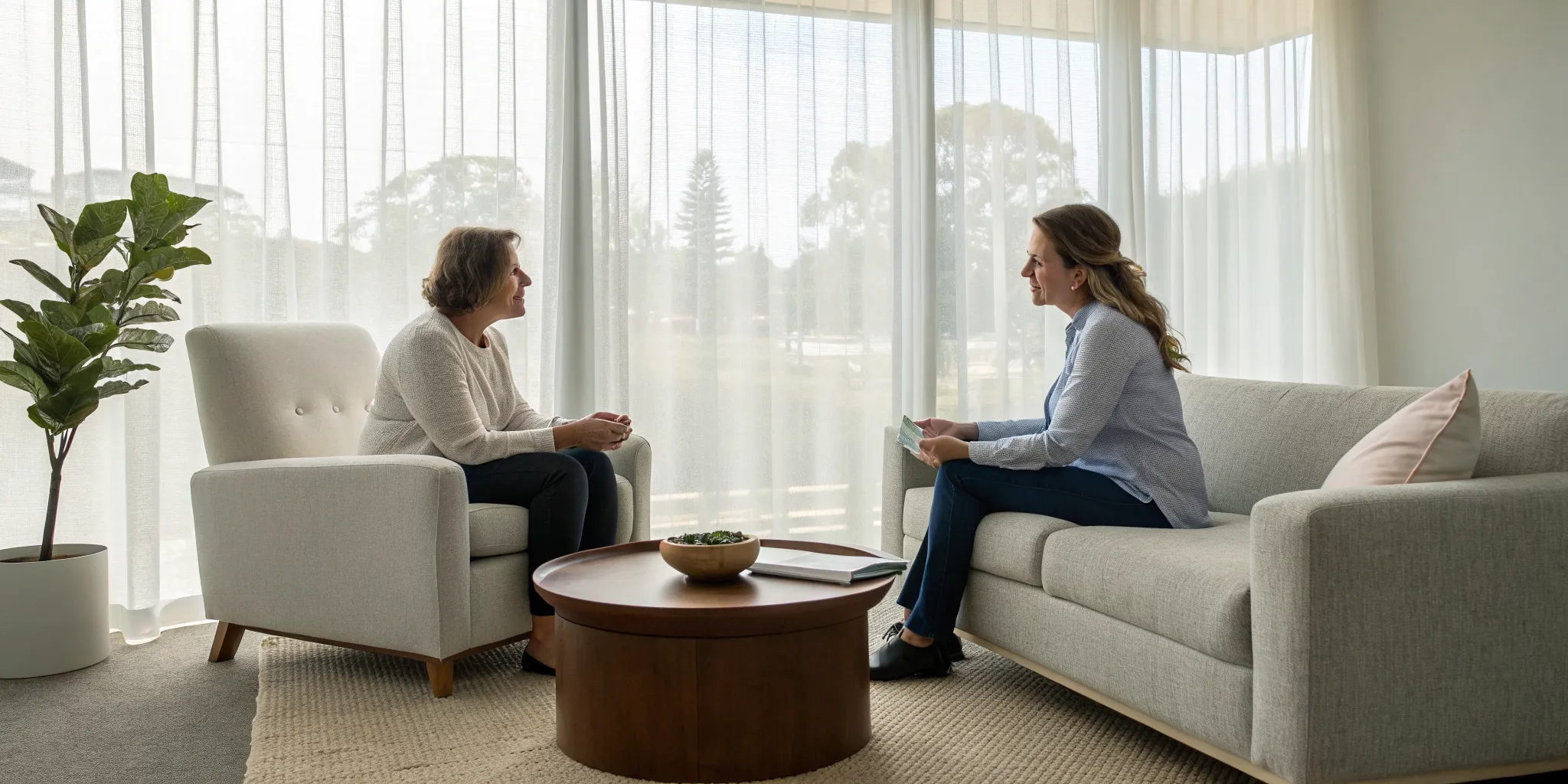
Have you ever wondered why you react a certain way when you feel close to someone? Or why you might crave intimacy but also fear it at the same time? These aren't just personality quirks; they are often deep-seated patterns learned long ago as a way to stay safe. Understanding the "why" behind your relational habits is the first step toward meaningful change, and this is the central focus of attachment-based therapy. So, what is attachment-based therapy? It is a compassionate approach that connects the dots between your childhood experiences and your adult relationships, providing a safe space to explore your emotional history not to place blame, but to gain profound clarity and freedom.
Key Takeaways
- Connect Your Past to Your Present: This therapy helps you understand how your earliest bonds created a blueprint for your adult relationships. Identifying your attachment style, whether anxious, avoidant, or secure, explains your reactions and is the first step toward meaningful change.
- The Therapeutic Relationship is a Safe Base: The entire process is built on the trusting, consistent relationship you form with your therapist. This connection acts as a model for healthy attachment, giving you a safe space to practice vulnerability and learn new ways of relating to others.
- Develop Practical Skills for the Future: This therapy is forward-looking and focuses on building actionable skills. You will learn how to communicate your needs more clearly, manage conflict effectively, and build the self-esteem required for stable, fulfilling connections.
What Is Attachment-Based Therapy?
Have you ever wondered why you react a certain way in relationships, or why the same patterns seem to show up again and again? Attachment-based therapy is a form of counseling that helps you connect the dots between your earliest relationships and how you show up in your life today. It’s a warm, collaborative approach that focuses on building trust and understanding the emotional blueprints we carry from childhood into our adult connections.
The core idea is that our first bonds, usually with parents or caregivers, teach us what to expect from others. They shape our sense of safety, our self-worth, and how we give and receive love. When those early experiences are inconsistent or difficult, it can leave a lasting impact. This therapy provides a safe space to explore those foundational experiences and heal the parts of you that learned to be anxious, distant, or unsure in relationships. The goal isn’t to place blame on the past, but to understand its influence so you can build a more secure and fulfilling future.
Its Core Principles and Purpose
At its heart, attachment-based therapy is about helping you build healthier, more secure relationships with yourself and the people you care about. It operates on the principle that our early attachment experiences create an internal "map" for how we navigate connections throughout our lives. If your childhood involved feeling misunderstood or unsupported, that map might lead you to expect disappointment or to keep people at a distance.
The main purpose of this therapy is to help you revise that map. By working with a therapist, you can identify how these old patterns affect your current behaviors and emotional responses. The ultimate goal is to help you develop what’s known as a “secure attachment,” where you feel confident in yourself and can trust others, leading to more satisfying and stable personal relationships.
How It Differs From Other Therapies
It’s important to know that modern attachment-based therapy is very different from an outdated and harmful practice called "attachment therapy." The older methods, which sometimes involved physical restraint, are not supported by science and are not used by ethical practitioners. Reputable attachment-based therapy is a gentle, process-oriented approach that is widely accepted in psychology.
What makes it unique is its strong focus on the relationship you build with your therapist. This connection becomes a safe, reliable base where you can practice new ways of relating to others. Instead of just talking about problems, you and your therapist actively work on building trust and expressing emotions in the moment. This hands-on experience helps you internalize what a secure, supportive relationship feels like, making it possible to create that in your own life.
Where Does Attachment Theory Come From?
To understand how this therapy works, it helps to know where the ideas came from. Attachment theory isn’t just a random concept; it’s built on decades of careful observation and research into how we form our very first relationships and how they shape us for years to come. The work of two key pioneers, John Bowlby and Mary Ainsworth, laid the foundation for everything we know about attachment today. Their discoveries give us a map for understanding our own relational patterns.
The Groundwork: John Bowlby's Research
The core ideas of attachment-based therapy began with British psychologist John Bowlby in the 1960s. He was one of the first to really focus on the powerful bond between children and their primary caregivers, suggesting this connection is essential for our emotional and social development. Bowlby introduced the concept of a "secure base." Think of it this way: when a child feels their caregiver is a reliable source of safety and comfort, they have the confidence to explore their environment, learn about the world, and build healthy relationships later on. This foundational sense of security is what attachment theory is all about.
The Discovery: Mary Ainsworth's Attachment Styles
Building on Bowlby’s work, a researcher named Mary Ainsworth wanted to see these bonds in action. In the 1970s, she conducted a famous study called the "Strange Situation." By observing how toddlers responded to being briefly separated from and then reunited with their caregivers, she identified three distinct patterns. These became known as the primary attachment styles: secure, anxious, and avoidant. A fourth style, disorganized, was added later by another researcher. The incredible insight from this work is that these early patterns don't just disappear. They often become the blueprint for how we connect with others, especially romantic partners, throughout our adult lives.
What Are the Four Attachment Styles?
Think of attachment styles as the blueprints for how we connect with others. These patterns are formed in our earliest relationships with caregivers and influence how we behave in our adult relationships, especially when it comes to intimacy, communication, and conflict. While one style isn't inherently better than another, understanding your own pattern is the first step toward building the secure, fulfilling connections you deserve. Most people find they lean toward one of four main styles.
Secure
If you have a secure attachment style, you generally feel comfortable with intimacy and are not afraid of being vulnerable. You trust others and, just as importantly, you trust yourself in relationships. You can communicate your needs and feelings directly and effectively, and you’re able to give and receive love without intense anxiety. While you value your connections, you also maintain a strong sense of self. This balance allows for stable, healthy, and satisfying relationships, which is often the goal of our work together at The Relationship Clinic.
Anxious
An anxious attachment style often comes with a deep-seated fear of abandonment. You might crave closeness and intimacy but constantly worry that your partner doesn't feel the same way. This can lead to a need for frequent reassurance and a tendency to become overly dependent on the relationship for your sense of self-worth. You might find yourself analyzing every interaction, feeling on edge when you don't hear back from someone right away. This pattern can be exhausting, but it comes from a valid need for safety and connection that we can explore in individual counseling.
Avoidant
If you have an avoidant attachment style, you likely place a high value on your independence and self-sufficiency. The idea of relying on someone else can feel uncomfortable, and you might distance yourself when you feel someone getting too close. This isn't because you don't have feelings; it's a protective mechanism to avoid vulnerability and potential rejection. You might prefer to handle stress on your own and see emotional intimacy as a threat to your freedom. Often, people with this style are seen as strong and independent, but they may secretly long for a connection they don't know how to build.
Disorganized
A disorganized attachment style can feel like a confusing internal tug-of-war. You want to be close to others, but you also fear that closeness will lead to pain. This often results from inconsistent or frightening experiences with early caregivers. As an adult, you might find yourself in chaotic relationships, simultaneously pushing people away and pulling them back in. You may struggle to trust others and regulate your emotions, feeling overwhelmed by the very connection you desire. Healing these deep-rooted patterns is possible through a safe and consistent therapeutic relationship.
How Does Attachment-Based Therapy Work?
Attachment-based therapy is a collaborative process that focuses on building security and trust. It’s not about quick fixes; it’s about getting to the root of how you connect with others. The work centers on the idea that our earliest relationships create a blueprint for how we behave in our adult relationships. By understanding that blueprint, you can start to redraw the parts that are no longer serving you. The goal is to help you form stronger, healthier, and more fulfilling connections, starting with the one you have with your therapist. This approach is often shorter-term and aims to equip you with the insight and skills to build the secure relationships you deserve.
Your Therapeutic Relationship as a Safe Base
The cornerstone of attachment-based therapy is the relationship you build with your therapist. Think of it as your secure home base. It’s a safe, non-judgmental space where you can explore your feelings and experiences without fear. This trusting, supportive connection is designed to model what a healthy attachment feels like. For many people, this might be the first time they’ve experienced a relationship where they can be completely open and vulnerable. This therapeutic bond becomes the foundation from which you can begin to understand your past, heal old wounds, and practice new ways of relating to others before taking them out into the world. Our team of therapists is dedicated to creating this exact kind of supportive environment.
Key Techniques You'll Use
This therapy involves a few key steps that build on one another. First, you’ll look back at your childhood experiences to see how they might be influencing your thoughts and actions today. This isn’t about placing blame; it’s about gaining understanding. Next, you might work on what’s sometimes called “re-parenting” your inner child. This means learning to give yourself the compassion, validation, and care you may not have received when you were young. Once you’ve made progress in understanding your past and caring for yourself, the focus shifts to your current relationships. You’ll learn to apply these new insights to build healthier dynamics with the important people in your life.
Exploring Your Early Relational Patterns
A major part of the process is identifying and understanding the relational patterns you learned early in life. These patterns, developed in childhood for protection and connection, often continue into adulthood, even when they no longer work for us. For example, you might find you always pull away when a partner gets too close, or you feel intense anxiety when you’re not in constant contact. Attachment-based therapy helps you connect these behaviors to their origins. By exploring these deep-rooted patterns, you can understand why you react the way you do. This awareness is the first step toward consciously choosing different, healthier behaviors in your relationships today.
What Happens in a Session?
Stepping into a therapy session for the first time can feel a bit mysterious, but the process is more straightforward than you might think. Attachment-based therapy is a collaborative effort between you and your therapist. Together, you’ll create a safe space to explore your relationship patterns, understand their origins, and build a new foundation for how you connect with others. The goal isn’t to rehash the past for its own sake, but to use its lessons to create a more fulfilling present and future.
Your sessions will be a mix of conversation, reflection, and practical skill-building. Your therapist acts as a secure base, offering support and guidance as you examine your feelings and behaviors. You’ll learn to recognize your emotional triggers, communicate your needs more clearly, and respond to others with greater empathy. It’s a process of discovery that empowers you to build the healthy, secure relationships you deserve.
Identifying Your Attachment Style
One of the first things you’ll do with your therapist is figure out your attachment style. Think of this as the blueprint for how you tend to act in your closest relationships. Whether you lean toward being anxious, avoidant, or secure, recognizing your style is a game-changer. It helps you make sense of your reactions, like why you might feel a constant need for reassurance or why you tend to pull away when someone gets too close.
Understanding these patterns is the first step toward changing them. By identifying your style, you can begin to see how it affects your ability to trust others and build emotional intimacy. This self-awareness is powerful because it moves you from reacting automatically to choosing your responses intentionally. It’s about learning your own relational language so you can start writing a new story for yourself.
Working Through Past Experiences
To understand your present, you often need to look at your past. In your sessions, you’ll gently explore your early life, particularly your relationships with parents or caregivers. This isn’t about placing blame; it’s about connecting the dots. Our first bonds teach us what to expect from others, and these lessons can stick with us for a lifetime, shaping our adult relationships in ways we might not even realize.
This exploration helps uncover the roots of your attachment style. Your therapist will guide you through these memories in a safe and supportive way, helping you understand how those early experiences might be influencing your current dynamics. By making these connections, you can start to heal old wounds and free yourself from patterns that no longer serve you. It’s a crucial part of the work that paves the way for lasting change.
Building Skills for a Secure Future
Attachment-based therapy is very much focused on the future you want to create. After you understand your patterns and their origins, the focus shifts to building practical skills for healthier relationships. You’ll learn new ways to communicate your needs, manage conflict, and build genuine emotional intimacy. The goal is to help you develop the habits of a securely attached person, someone who can give and receive love with confidence and trust.
Your therapist will provide you with tools to foster self-awareness and break down the barriers that insecure attachment styles can create. This work helps you heal from past hurts and cultivate relationships built on a strong foundation of trust and mutual respect. If you’re ready to start this process, our team at The Relationship Clinic is here to help you build the skills for a more secure and connected future.
Is This Therapy Right for You?
Attachment-based therapy can be a powerful tool for healing, but it’s helpful to know if it aligns with what you’re going through. This approach isn’t just for one type of person or problem; it can support individuals, couples, and families facing a variety of challenges. If you find yourself stuck in repeating patterns, struggling with trust, or feeling like your past is holding you back, this therapy might offer the clarity and connection you’re looking for. It’s particularly effective for those who want to understand the "why" behind their feelings and behaviors in relationships.
For Adults Struggling in Relationships
If you feel like you and your partner are having the same fight over and over, or if you struggle to feel secure in your relationships, attachment-based therapy can help. This approach allows you to revisit old wounds with a clear path toward healing. It focuses on understanding how your earliest bonds have shaped your current relational patterns. For couples, it creates a space to see each other’s vulnerabilities and learn how to become a source of safety and support for one another. For individuals, it helps you recognize why you might push people away or cling too tightly, empowering you to form healthier connections and build the trusting relationships you deserve.
For Individuals Healing From Trauma
Past trauma, especially from childhood, can leave deep emotional scars that show up as anxiety, depression, or a constant feeling of being unsafe. Attachment-based therapy is especially helpful for this because it gets to the root of these feelings. Instead of just managing symptoms, it helps you understand and process the early experiences that shaped your view of the world and relationships. By working with a therapist to create a secure and trusting bond, you can begin to heal the attachment injuries from your past. This process helps you resolve deep-seated emotional challenges and build a stronger sense of self, improving your relationships with others and with yourself.
For Children and Teens in Transition
Young people often have a tough time expressing what they’re going through, which can come out as moodiness, acting out, or withdrawing. Attachment therapy can be incredibly effective for children and teens dealing with trauma, anxiety, or major life changes like a divorce or a move. The therapy focuses on strengthening the bond between the child and their caregivers, which is the foundation of their sense of security. It’s not just about helping the child learn new coping skills; it’s also about helping parents and caregivers understand their child’s needs and learn more effective parenting skills. By repairing and reinforcing this core relationship, the whole family can find healthier ways to connect and communicate.
What Are the Benefits?
Committing to therapy is a big step, and it’s fair to wonder what you’ll get out of it. Attachment-based therapy offers a clear path toward healing your relationships, starting with the one you have with yourself. By looking at your earliest bonds, you can begin to understand your current patterns and create lasting, positive change. This process isn't just about looking back; it's about building a more secure and fulfilling future. The work you do here can ripple out, improving how you connect with everyone in your life.
Gain Emotional Awareness and Control
One of the most powerful outcomes of this therapy is learning to understand your own feelings. You’ll start to connect your present-day emotional reactions to your past experiences, which helps you see them not as random or overwhelming, but as understandable responses. This awareness is the first step toward managing them effectively. Instead of being carried away by intense emotions, you’ll develop a stronger sense of emotional resilience. You learn to recognize your triggers, pause before you react, and choose how you want to respond, giving you a greater sense of control over your inner world.
Build Stronger Relationships and Communication
If you feel stuck in cycles of misunderstanding or conflict, attachment-based therapy can help you find a way forward. By addressing the attachment patterns you developed early in life, you can resolve the emotional challenges that get in the way of healthy connections. This approach helps you understand why you might struggle with trust or intimacy. As you heal, you’ll find it easier to build trust, communicate your needs clearly, and form the healthier, more secure bonds you’ve been wanting. This is a core focus of our couples counseling work, where we help partners create a new, more supportive dynamic.
Grow Your Self-Esteem and Ability to Trust
Old wounds can make it incredibly difficult to trust others and even yourself. Attachment-based therapy provides a safe space to revisit these experiences with a clear path toward healing. As you work with your therapist, you’ll begin to repair your ability to trust, which is fundamental to all close relationships. This process of building security with your therapist often translates into feeling more secure in your other connections. Rebuilding this foundation helps you see yourself as worthy of love and respect, which naturally improves your self-esteem and confidence in your ability to build lasting, meaningful relationships.
What Are the Potential Challenges?
Starting any kind of therapy is a big step, and attachment-based therapy is no different. While the goal is healing and growth, the path there can have its own set of challenges. Knowing what to expect can help you feel more prepared for the work ahead. These hurdles are a normal part of the process, and your therapist will be there to support you through them.
Opening Up and Feeling Vulnerable
It’s one thing to decide you want to go to therapy; it’s another to actually sit in the room and share your innermost thoughts and fears. If your early life involved trauma or inconsistent care, feeling safe enough to be vulnerable can present some unique therapeutic challenges. This hesitation is a protective instinct you developed for a good reason. The first step in therapy is often just learning that it’s okay to let that guard down in a safe, confidential space, even if it feels unfamiliar or scary at first. Your therapist’s job is to move at your pace and create an environment where you feel seen and accepted.
Building Trust with Your Therapist
Vulnerability requires trust, and building it can be a challenge in itself, especially if you have an insecure attachment style. When past relationships have felt unsafe or unreliable, it’s natural to be wary of letting someone new in, even a therapist. Therapy offers a unique opportunity to develop secure relationships built on consistency and emotional safety. Your relationship with your therapist becomes a practice ground for what it feels like to trust someone who is dependable, empathetic, and has your best interests at heart. It takes time, but this is a foundational part of the healing process.
Facing Deep-Rooted Patterns
Attachment-based therapy goes beyond addressing surface-level symptoms. It asks you to look at the deep-rooted relational patterns you learned early in life. Confronting these long-standing habits and the painful experiences that created them can be emotionally intense. The work involves not just understanding your past but also learning new skills for emotional regulation and connection. While it can be difficult, this is how you develop secure attachments and create lasting change in how you experience your relationships and yourself. It’s about building a new foundation for your future.
Common Myths About Attachment-Based Therapy
When you’re exploring a new type of therapy, it’s easy to come across conflicting information. Misconceptions can create unnecessary worry and might even stop you from seeking the support you deserve. Let’s clear the air and address some of the most common myths about attachment-based therapy, so you can move forward with confidence and clarity. Understanding what this therapy is, and what it isn’t, is the first step toward healing.
Setting the Record Straight on Outdated Practices
First, it’s crucial to distinguish between modern attachment-based therapy and an outdated, harmful practice sometimes called "attachment therapy." These two approaches are completely different. The older, unproven "attachment therapies" sometimes involved coercive techniques like physical restraint, which are not supported by science and are considered unethical.
Modern attachment-based therapy, on the other hand, is a safe, recognized, and compassionate treatment. It is grounded in decades of research and focuses on building a secure and trusting relationship between you and your therapist. There is absolutely no use of physical discomfort or force. Instead, the entire process is built on empathy, understanding, and creating a safe space for you to explore your feelings and relational patterns.
Understanding the Timeline for Healing
Another common question is about how long therapy will take. It’s natural to want a clear timeline, but attachment-based therapy is not a quick fix. The journey is unique to each person and depends entirely on your personal history, your goals, and the patterns you’re working to change. Some people begin to notice positive shifts in their relationships and self-awareness within a few months, while others may need more time to work through deeper issues.
The goal isn’t to rush to a finish line but to move toward what experts call "earned secure attachment." This means gradually developing the skills and self-understanding to build healthier, more stable connections in your life. It’s about making lasting changes, not finding a temporary solution. Progress, not perfection, is the focus.
How to Get Started
Taking the first step toward therapy can feel like a big deal, but it doesn’t have to be complicated. The process begins with finding a professional you connect with and understanding what those initial conversations will look like. Here’s a straightforward guide to help you begin.
Find the Right Therapist for You
Finding a therapist who feels like the right fit is the most important part of this process. You’ll want to look for a licensed professional, like a psychologist or a marriage and family therapist, who has specific training in attachment-based methods. When you reach out, don’t be shy about asking questions. Think of it as a brief interview to see if you click. You can ask things like: How do you help people with their specific attachment concerns? What does a typical session with you involve? The goal is to find someone you feel comfortable and safe with. Our team of therapists is experienced in attachment work and is here to answer your questions.
What to Expect in Your First Few Sessions
Your first few sessions are all about building a foundation. This is a time for you and your therapist to get to know each other and for you to share your story at your own pace. Expect open, supportive conversations about your life, including your early childhood experiences and your current relationships. Your therapist will listen carefully to understand the patterns that might be causing you pain. It’s completely normal to feel a little hesitant to open up at first. The entire point of these initial meetings is to create a trusting relationship that will serve as a safe base for the deeper work to come.
Frequently Asked Questions
Do I need to know my attachment style before starting therapy? Not at all. In fact, discovering your attachment patterns is a key part of the therapeutic process that you and your therapist will do together. You don't need to come in with any labels or self-diagnoses. Just bring your curiosity about your relationships, and your therapist will help you connect the dots and make sense of your experiences.
Is this therapy only helpful for romantic relationships? While it’s incredibly effective for couples, the benefits of attachment-based therapy extend to all kinds of connections. The patterns we learn in childhood show up in our friendships, our family dynamics, and even in our professional lives. This therapy helps you understand your core way of relating to people, which can improve every important relationship you have, including the one with yourself.
Will I have to spend all my time talking about my childhood? While exploring your early experiences is an important part of the process, it’s not about getting stuck in the past. We look back with a specific purpose: to understand how those foundational relationships are influencing your life right now. The goal is to use that insight to build practical skills and create a more secure and fulfilling future.
Can my attachment style actually change, or am I stuck with it? Yes, your attachment style can absolutely change. That’s the entire goal of this work. Through therapy, you can develop what is known as an "earned secure attachment." This means that by understanding your past and building new relational skills in a safe therapeutic relationship, you can consciously create the secure, stable, and trusting connections you want in your adult life.
How is this different from other kinds of talk therapy? The key difference is the strong focus on the relationship you build with your therapist. This connection isn't just a backdrop for the conversation; it's an active part of the healing process. It serves as a safe, real-time model for what a secure bond feels like. This allows you to practice new ways of relating in the moment, rather than just talking about them.





